
Introduction
A starter motor problem can leave you stranded without warning — and in 2026, with repair costs higher than ever, catching the signs early could save you hundreds of dollars. Most drivers only notice a starter motor problem when the car refuses to start completely. By then, the damage is done.
This guide covers everything: symptoms, causes, costs, fixes, and how long your starter should actually last.
What Is a Starter Motor and What Does It Do?
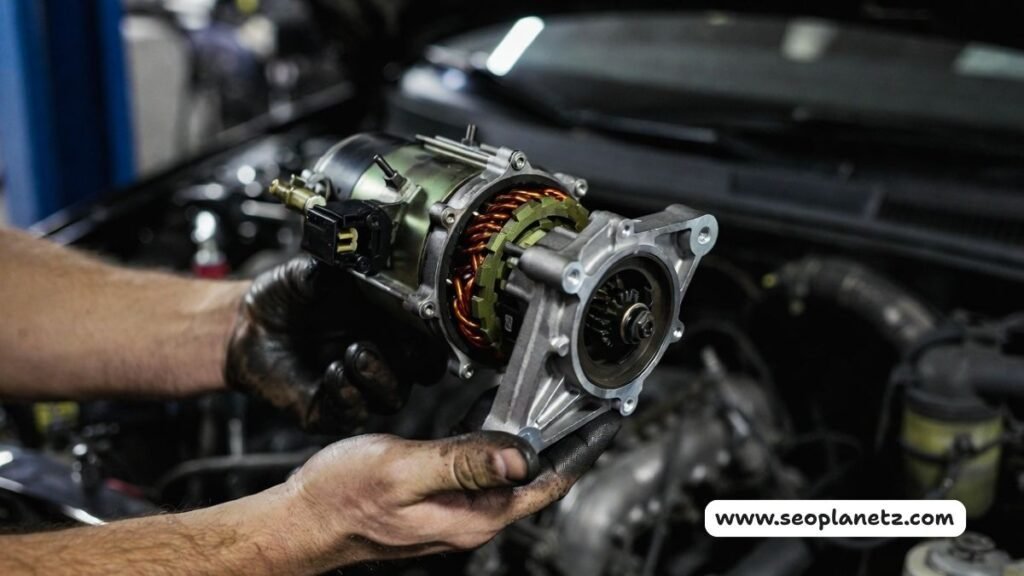
Your starter motor is a small but powerful electric motor that cranks your engine to life every time you turn the key or press the ignition button. Without it, your engine simply cannot start — no matter how good your battery or fuel system is.
The starter draws power from the battery, engages a pinion gear with the flywheel, and rotates the engine fast enough to begin combustion. This entire process takes less than a second in a healthy system.
Also Read: How Long Do Car Batteries Last? 7 Critical Facts You Need to Know
Modern starters are built to last, but they’re not indestructible. Understanding a starter motor problem early is the difference between a $30 fix and a $400+ replacement.
5 Hidden Signs of a Starter Motor Problem You Shouldn’t Ignore
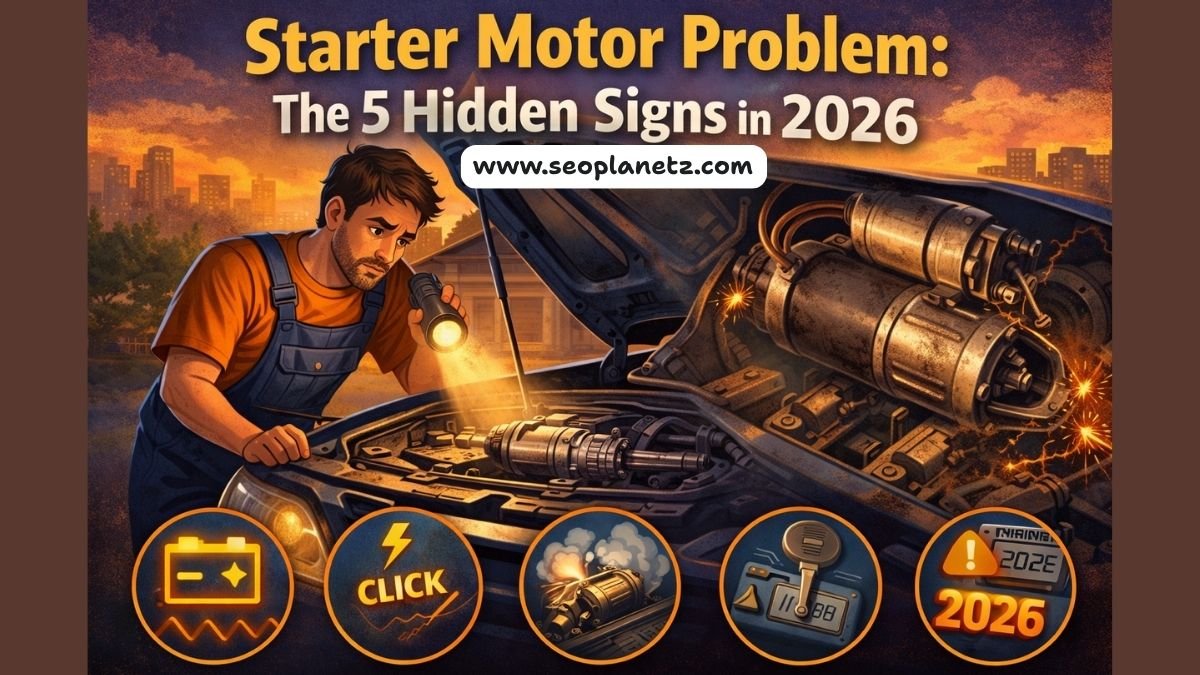
Sign 1: A Single Clicking Sound When You Turn the Key
One loud click — not rapid clicking (that’s usually a dead battery) — points directly to a starter motor problem. It means the solenoid is engaging but the motor isn’t spinning. This is one of the earliest and most overlooked symptoms.
Sign 2: Grinding Noise During Startup
A grinding noise means the starter’s pinion gear isn’t meshing properly with the flywheel ring gear. If you keep ignoring this starter motor problem, you’ll damage the flywheel — a far more expensive repair costing $500–$1,500.
Sign 3: Intermittent Starting Issues
Your car starts fine one day, then nothing the next. Intermittent starter motor problems are often caused by worn brushes inside the motor or a failing solenoid. Because it’s inconsistent, many drivers blame the battery — and miss the real issue entirely.
Also Read: How to Jump a Car Safely and Correctly in 2026
Sign 4: Smoke or Burning Smell
If you notice smoke or a burning smell after trying to start your car repeatedly, stop immediately. This signals an electrical starter motor problem — likely a short circuit or the motor overheating from over-cranking. Continuing can cause permanent damage.
Also Read: Why Is My Car Smoking? 7 Common Causes and How to Fix Them
Sign 5: Starter Stays On After Engine Starts
If the starter keeps running after the engine fires up, the main contact in the solenoid is stuck. This is a serious starter motor problem — it will burn out the starter motor within minutes and can damage your flywheel simultaneously.

What Is the Biggest Cause of Starter Motor Failure?
According to automotive engineers and data from the National Institute for Automotive Service Excellence (ASE), the single biggest cause of starter motor failure is electrical wear — specifically worn carbon brushes and corroded connections.
Here are the top causes ranked:
| Cause | Frequency | Preventable? |
|---|---|---|
| Worn carbon brushes | 35% | Yes (regular inspection) |
| Corroded battery terminals | 25% | Yes (cleaning) |
| Solenoid failure | 20% | Partially |
| Heat damage from engine bay | 12% | Partially |
| Oil contamination | 8% | Yes (fix leaks early) |
Note: Percentages based on industry repair data aggregates. Individual results vary by vehicle age and climate.
Heat is particularly damaging. Starters mounted low on the engine block absorb tremendous heat cycles. Over time, this degrades insulation and weakens the motor windings — accelerating every other failure mode on this list.
Diesel Starter Motor Problems and Solutions
Diesel engines require significantly more cranking torque than gasoline engines, which means diesel starter motor problems tend to be more severe and more expensive. Diesel starters spin larger, higher-compression engines — putting far more stress on every component.
Common diesel-specific issues:
- Pre-engagement solenoid failure (very common in cold climates)
- Armature winding burnout from extended cranking
- Pinion gear stripping due to high-compression resistance
The U.S. Department of Energy’s Alternative Fuels Data Center notes that diesel cold-start issues are among the top causes of fleet vehicle downtime in commercial operations.
If you drive a diesel and notice any starter motor problem symptoms — especially in winter — address it immediately. Diesel repairs cost 30–50% more than equivalent gasoline vehicle repairs.
Also Read: Car Fuel Pump Price and Maintenance in 2026
Starter Motor Replacement Cost: What to Expect in 2026
One of the first questions drivers ask is: how much does a starter motor cost? The answer depends heavily on your vehicle make, model, and whether you choose OEM or aftermarket parts.
| Vehicle Type | Parts Cost | Labor Cost | Total Estimate |
|---|---|---|---|
| Economy sedan (e.g., Honda Civic) | $80–$150 | $100–$150 | $180–$300 |
| Mid-size SUV (e.g., Toyota RAV4) | $120–$220 | $120–$200 | $240–$420 |
| Truck (e.g., Chevy Silverado) | $150–$300 | $150–$250 | $300–$550 |
| Diesel vehicle | $200–$450 | $200–$350 | $400–$800 |
| Luxury/European vehicle | $250–$600 | $200–$400 | $450–$1,000 |
Labor rates vary by region. Urban markets typically run 20–30% higher than rural areas.
The Bureau of Labor Statistics tracks automotive repair inflation — labor rates have risen approximately 18% since 2022, which explains why starter motor replacement cost is noticeably higher in 2026 than even three years ago.
Also Read: 2026 Ford Escape Review, Price, and Specs
How to Fix a Starter Without Replacing It
Not every starter motor problem requires a full replacement. In many cases, you can extend the life of your starter significantly with targeted repairs.
Cleaning Corroded Connections
Corrosion on battery terminals and the starter’s electrical connections is responsible for roughly 25% of no-start complaints. Cleaning with a wire brush and applying anti-corrosion spray costs under $10 and takes 15 minutes.
Replacing Carbon Brushes
Inside most starters are carbon brushes that wear down over time. Replacing them costs $15–$40 in parts and is a feasible DIY repair on most vehicles. This fix can restore full function to a starter that’s sluggish or intermittently failing.
Tapping the Starter (Temporary Fix Only)
Lightly tapping the starter body with a hammer while someone tries to start the car can temporarily free a stuck solenoid or brushes. This is a well-known emergency technique — but treat it as a temporary measure, not a solution to your starter motor problem.
Also Read: 2024 Ford Bronco Raptor Specs & Prices
When You Cannot Avoid Replacement
If the armature windings are burned, the ring gear is stripped, or the solenoid is internally shorted, replacement is the only viable path. The Automotive Aftermarket Industry Association (AAIA) reports that remanufactured starters offer quality comparable to OEM at 40–60% of the cost — a smart middle ground.

Starter Motor Problem in Specific Vehicles
Starter Motor Problem: Toyota
Toyota owners — particularly Camry, Corolla, and Tacoma drivers — report starter motor problems most often between 100,000–150,000 miles. The issue is typically worn brushes or a failing solenoid contact. Toyota starters are generally reliable, but high mileage takes its toll. Toyota’s official service documentation recommends inspection at every major service interval.
Also Read: 2026 Toyota Prius Review, Price, and Specs
Starter Motor Problem: Chevy
Chevy trucks and SUVs — especially the Silverado and Tahoe — have a known vulnerability to heat-related starter damage. The starter sits close to the exhaust manifold on many GM V8 configurations. A heat shield wrap or replacing with a high-torque mini starter ($120–$200) is a popular and effective solution among Chevy owners.
How Long Does a Starter Motor Last?
A well-maintained starter motor typically lasts 80,000 to 150,000 miles or roughly 7–10 years under normal driving conditions. However, several factors shorten that lifespan significantly:
- Frequent short trips — starters cycle more often, accelerating brush wear
- Extreme heat or cold — both degrade electrical components faster
- Leaving accessories on before starting — increases electrical load on every start
- Delayed repairs on related systems — a weak battery forces the starter to work harder on every cycle
The Car Care Council recommends having your starting and charging system tested annually — especially after 5 years or 75,000 miles.
Also Read: 2020 Chevrolet Impala Specs & Prices
How to Test If a Starter Motor Is Faulty
You don’t need a mechanic to run a basic diagnostic. Here’s a simple at-home test sequence:
- Check the battery first — load test with a multimeter (should read 12.4–12.7V at rest)
- Check battery terminals — look for white/green corrosion buildup
- Listen carefully — one click = likely starter solenoid; no sound = could be ignition switch or fuse
- Voltage drop test — connect multimeter between starter positive terminal and battery positive during cranking; more than 0.5V drop indicates a problem
- Bench test — remove the starter and have it tested at any auto parts store (usually free)
Most AutoZone, O’Reilly, and NAPA locations will test your starter for free in under 10 minutes.

Key Takeaways
- A starter motor problem often shows up as clicking, grinding, intermittent starts, or burning smells — all before total failure
- The biggest cause of starter failure is worn carbon brushes and corroded electrical connections — both preventable
- Starter motor replacement cost ranges from $180 to $1,000+ depending on vehicle type and labor rates in 2026
- Diesel starter motor problems cost 30–50% more to fix than gasoline equivalents
- Not every starter motor problem requires full replacement — brush replacement and connection cleaning can restore function
- Starters typically last 80,000–150,000 miles; short trips and extreme temperatures shorten that lifespan
- Annual testing of your starting and charging system is the best preventive measure
Frequently Asked Questions
Q: How much will it cost to fix a starter motor problem?
A: Costs range from $180 for a basic economy car to over $800 for diesel or luxury vehicles in 2026. Labor typically accounts for $100–$350 of the total. Getting quotes from 2–3 shops can save you significantly.
Q: Can you fix a faulty starter motor without replacing it?
A: Yes, in many cases. Cleaning corroded terminals, replacing carbon brushes, or rebuilding the solenoid can restore a failing starter. Full replacement is only necessary when internal windings are burned or the armature is physically damaged.
Q: What is the most common cause of starter motor failure?
A: Worn carbon brushes and corroded electrical connections account for roughly 60% of all starter motor problems. Heat damage and solenoid failure are the next most common causes.
Q: How do you test if a starter motor problem is the real issue?
A: Start by ruling out the battery with a multimeter — it should read 12.4V+. Then check for corrosion on terminals. If you hear one loud click but no cranking, the solenoid is engaging but the motor isn’t spinning, which confirms a starter motor problem.
Q: Can you still drive a car with a bad starter?
A: Once the car is running, a bad starter doesn’t affect driving. The danger is that you may not be able to restart it once you turn it off. Avoid turning off the engine until you can get the starter motor problem diagnosed and repaired.
Q: What is the lifespan of a car starter?
A: Most starters last 80,000–150,000 miles or 7–10 years. Frequent short trips, extreme climates, and deferred maintenance on the battery and charging system can cut that lifespan in half.
Also Read: 2026 Chevy Silverado Specs & Prices
Conclusion
A starter motor problem rarely appears out of nowhere. The warning signs — clicking, grinding, intermittent failures, burning smells — give you a window to act before you’re stranded. In 2026, with repair costs continuing to climb, that window is more valuable than ever.
Whether you’re dealing with a starter motor problem on a Toyota, a Chevy diesel, or a daily commuter, the approach is the same: diagnose early, explore whether a repair can extend component life, and replace only when necessary. A remanufactured starter at $80–$150 can solve your starter motor problem at a fraction of new OEM pricing.
Don’t wait for a completely dead car to take action. Annual charging system checks, clean terminals, and attention to early symptoms are all it takes to keep this small but critical component working reliably for years.